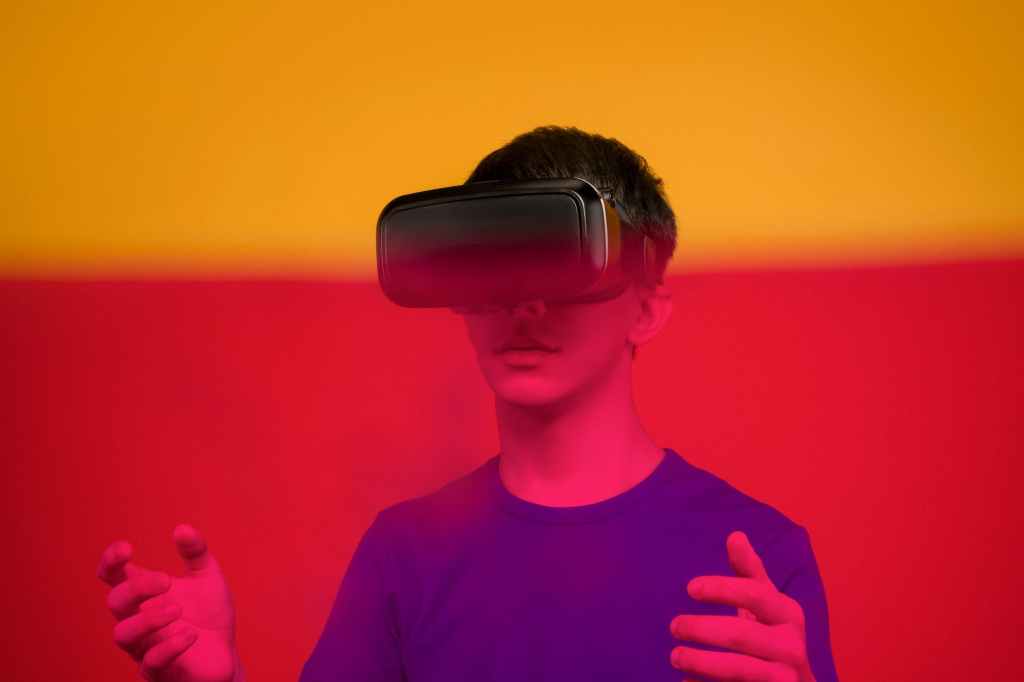
I am a complete tool junky. In my freetime I research the latest and greatest that help to bring about efficiency and performance to the everyday construction work as well as the advanced do-it-yourselfer. But one area that I have not personally done a lot of work in is with virtual reality (VR) advancements in construction. And this is definitely a technology advancement that is changing the construction game.
Although virtual reality (VR) is generally associated with video games and entertainment, it is increasingly being recognized by developers and construction professionals as having practical applications in their field. By using virtual reality, they can improve design, pitch projects, and enhance training and safety. These aren’t simply concepts for the future, as companies are already implementing these ideas today and seeing positive results.
In my world of estimation, I’m closely interested in how VR is shaping the design and pitching game. VR technology is becoming increasingly popular among architects and designers as a way to view projects in detail. An accurate, detailed render viewed with VR technology can provide a better understanding of how a project will turn out than schematics or concept renderings. By investing in VR technology, architects and designers can get the fine details just right and show collaborators and clients a 3D representation of their design. VR technology is not necessarily expensive, as common mobile phones can be retrofitted to act as VR headsets, and a headset isn’t always necessary to tour virtual spaces.
I read an article where they had interviewed Teris Pantazes, co-founder of Settle Rite Financial Service. Pantazes states that VR and augmented reality (AR) technology will become more refined and available in the next five years and will be part of almost every aspect of the construction process. It can be used in designing, walking through proposed repairs, finding solutions to problems that arise during construction, and even for speaking with someone off-site and remotely walking them through the site. Currently, the real estate industry is the one getting the most use out of VR technology, offering clients a firsthand view of their future home or commercial space before it’s built.
As the technology develops, it will become cheaper and more advanced, depicting photo-real renderings and changing how construction projects are pitched. VR tours are proving to be very popular and highly effective, and will only continue to gain traction as production costs come down.
VR also plays a critical role in safety training, maximizing cost savings, prevention of rework, and so much more.
How do you see VR playing a role in your industry?
Nate Regina
 Nate Regina Blog